
Most tradesmen are posting on social media… but not getting enquiries.
They upload photos.
They show finished jobs.
They explain their services.
But nothing happens.
No messages.
No calls.
No real leads.
That’s because most content focuses on what the business does — not what the customer feels.
The “What Hurts Sells” marketing strategy, as presented at the West Midland’s Business Festival 2026 focuses on identifying real customer pain points and speaking directly to them, turning content into a lead-generating system instead of a business notice board.
“What Hurts Sells” is a marketing strategy that focuses on addressing customer pain points rather than promoting service features. By highlighting real problems, businesses can build trust, attract qualified leads, and increase conversions.
What Is the “What Hurts, Sells” Strategy?
the What Hurts, sells marketing strategy Explained:
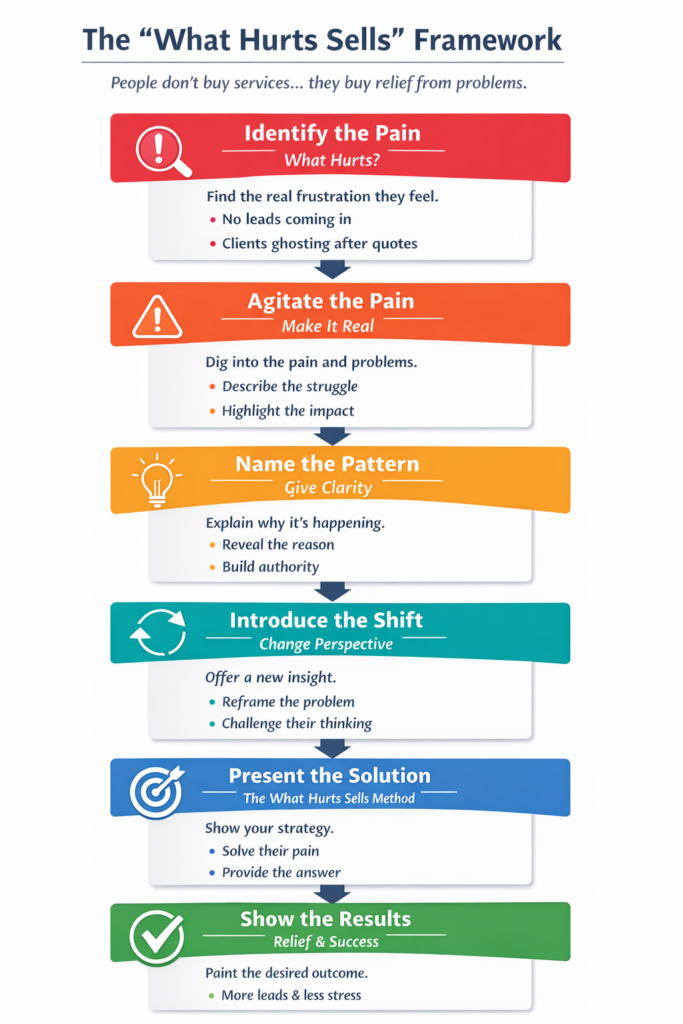
The “What Hurts Sells” approach is a marketing methodology that shifts focus from promoting services to highlighting customer problems.
Instead of saying:
“We offer plumbing services”
You focus on:
“Leaking pipes that keep coming back and costing you more money”
This creates instant relevance and emotional connection.
Why This strategy matters in the AI Age
In today’s digital world, content is everywhere.
Everyone can generate posts.
Everyone can write captions.
But most of it sounds the same.
Content is key. But relevant content is king
Hence, the best way to stand out is not by saying more. It’s by saying what actually matters to the customer.
Pain points cut through noise.
Generic content gets ignored.
The social media strategy for the tradesmen in the UK should not focus on more. It should focus on what matters.
Amass Leads Ltd is a Birmingham-based marketing agency. They specialise in generating leads for service businesses, particularly in the trades and home improvement sectors, using SEO, Google Ads, and social media strategy.
Here’s the “What Hurts” Insight
Customers don’t respond to services.
They respond to problems they recognise.
You’re not competing on skill alone.
You’re competing on who understands the customer better.
When a customer feels:
“This person understands exactly what I’m dealing with”
That’s when they enquire.
The Key Principles Behind “What Hurts Sells”
1. Targeted Messaging (Cutting Through the Noise)
Most businesses create general content.
But general content attracts general attention; not serious enquiries.
When you focus on specific problems:
- “Boiler breaking down in winter”
- “Leaks that keep coming back”
- “Customers asking for cheaper quotes”
You attract people actively experiencing those issues.
2. Building Trust Before the First Call
Trust doesn’t start when the customer contacts you.
It starts when they read your content.
When you describe their situation better than they can themselves, you position yourself as the expert before the conversation even begins.
3. Turning Social Media Into a Lead Engine
Most tradesmen use social media as a gallery.
Photos of jobs.
Before and after shots.
But customers don’t search for photos — they search for solutions.
When your content speaks to real problems, social media becomes a tool that attracts enquiries instead of just showing work.
Example: Feature-Based vs Pain-Based Content
Feature-based:
“We provide high-quality plumbing services”
Pain-based:
“Tired of fixing the same leak every year? Here’s why it keeps happening — and how to stop it properly.”
One gets ignored.
The other gets enquiries.
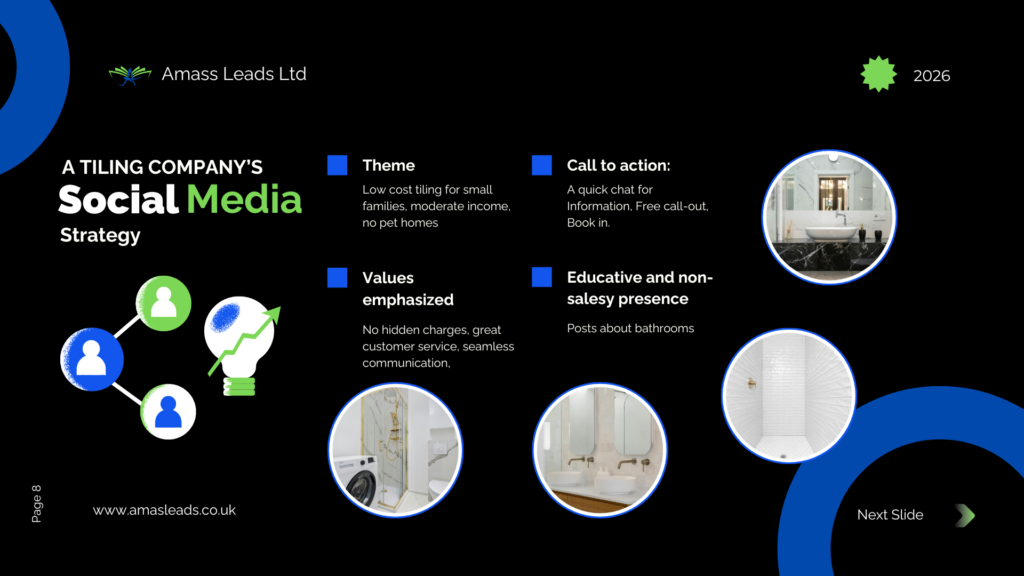
Who is behind this approach?
This approach is used by Amass Leads Ltd, a Birmingham-based marketing agency specialising in lead generation for trades and home improvement businesses.
They focus on:
– SEO
– Google Ads
– Social media strategy
All built around attracting high-quality leads by addressing real customer problems.
If your content isn’t generating enquiries, it’s not because you need to post more — it’s because you need to say the right things.
If you want help turning your content into a lead-generating system using the “What Hurts Sells” strategy, we are right here to position your business for high-Intent enquiries.
