
Bad marketing doesn’t look bad when it’s taking place.
It looks normal.
That’s why it keeps happening.
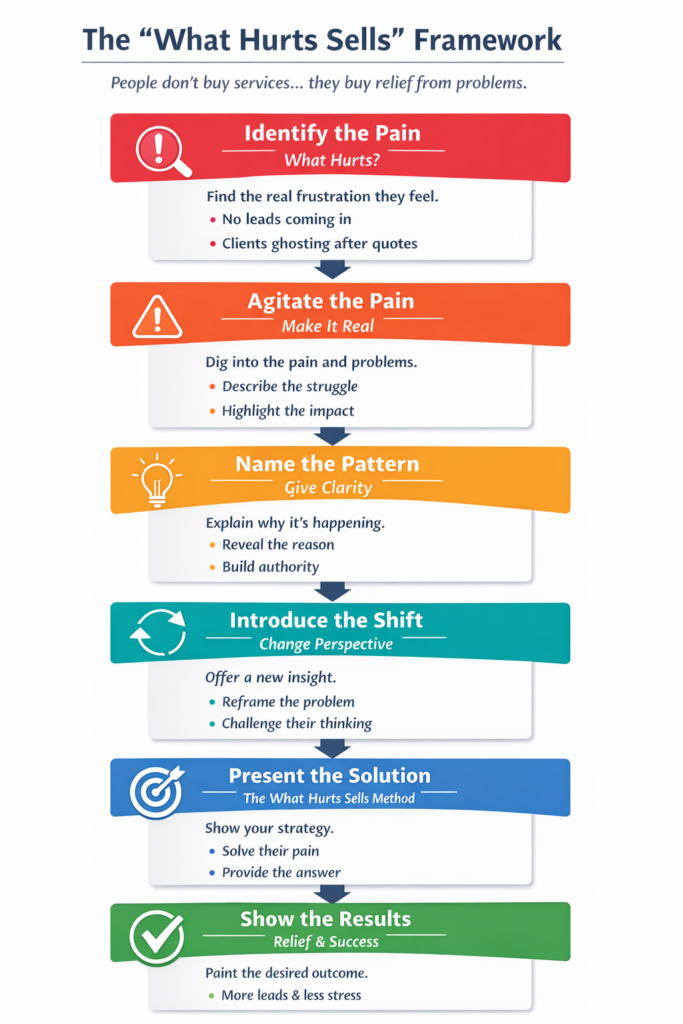
What does bad marketing look like for plumbers?
Bad marketing for plumbers looks like generic messaging, unclear positioning, and content that focuses on the business features instead of the customer’s problem and the plumber’s unique way of solving it.
It creates visibility without relevance, leading to low engagement, poor enquiries, and inconsistent work.
Why is my marketing not bringing plumbing jobs?
Because it’s not connecting with what customers are actually going through.
If your message doesn’t match their problem, they ignore it, even if they see it.
What makes plumbing marketing effective?
Clarity and relevance.
Speaking directly to real issues like leaks, no hot water, or urgent repairs makes customers recognise themselves and take action.
Is posting regularly enough to get leads?
No.
Posting regularly without positioning just creates noise. It’s not about how often you post, it’s about what you say.
How do I know if my marketing is bad?
If you’re getting little response, low-quality enquiries, or inconsistent work, it’s usually a sign your marketing isn’t aligned with customer behaviour.
Why Bad Marketing Feels Normal
Bad marketing isn’t obvious.
It looks like:
- “Another job completed”
- “Affordable plumbing services”
- “DM for a quote”
Nothing wrong with it on the surface.
But it doesn’t move anyone.
Here’s the WHS Insight
Most plumbers think:
“If I show my work, people will contact me”
So they:
- post finished jobs
- talk about their services
- try to look professional
But customers don’t act on effort.
They act on relevance.
The real problem
Your marketing is about:
you
What you’ve done.
What you offer.
But your customer is thinking about:
Them
their problem
their need
their satisfaction
What’s going wrong.
What needs fixing.
How urgent it is.
That gap?
That’s bad marketing.
What this leads to
- low engagement
- weak enquiries
- people scrolling past
- inconsistent work
Because you’re visible…
But not connecting.
Moving From Bad to Effective Marketing
Good plumbing marketing isn’t louder.
It’s clearer.
1. Problem (What hurts)
Speak to real situations:
- “No hot water this morning?”
- “Leak getting worse?”
2. Timing (When it matters)
Understand when customers act.
Not when you feel like posting.
3. Relevance (Why you)
Make it obvious:
- why you’re the right choice
- what happens if it’s done wrong
From:
“Let me show what I do”
To:
“Let me speak to what they’re dealing with”
What this changes
- better engagement
- stronger enquiries
- more consistent work
Because now…
You’re not just posting.
You’re connecting.
So when you feel like:
“My marketing isn’t working”
It’s not because you’re not trying.
You are.
It’s just not landing.
And once you see what bad marketing actually looks like…
You can’t unsee it.
That’s when things start to change.
If you need any support with triggering change with your marketing efforts, we are only this click away.
